1
/
of
11
SKU:10428008
M-TAC
FPV Drone Bag-Backpack for 10” Drones Lightweight
FPV Drone Bag-Backpack for 10” Drones Lightweight
Regular price
$ 17,912.79 MXN
Regular price
Sale price
$ 17,912.79 MXN
Unit price
/
per
Tax included.
- Envío gratis**
**Envío gratis en compras superiores a $800 pesos Mx.
Couldn't load pickup availability
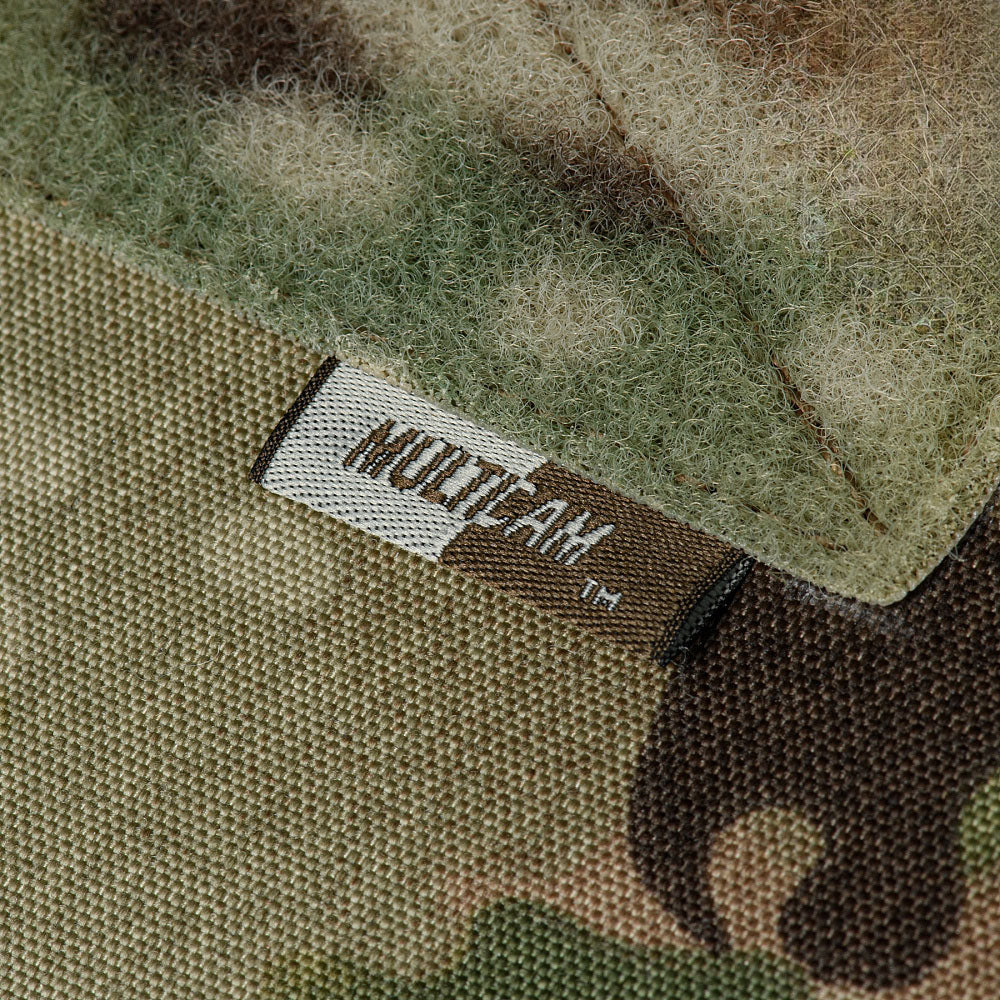
Modern warfare requires modern solutions. As Ukrainian military forces actively use FPV drones to destroy enemy equipment and personnel, there is a growing need for convenient and secure transportation of these “ferocious birds.” M-TAC, expanding its range of gear for transporting FPV drones, has developed and released a new LIGHTWEIGHT FPV 10” DRONE BAG-BACKPACK. The product consists of a main compartment designed to simultaneously carry up to 6 drones (maximum). On the flap of the main compartment, there are two spacious mesh pockets for storing small, lightweight items. Inside the main compartment, there are 5 internal dividers made of thermoplastic composite Tegris, further reinforced with carbon. For safe transportation, the areas of the dividers that are in contact with the propeller blades are padded with soft EVA foam. The same material is used for the vertical “rails” on the dividers, which prevent the drones from sliding during transport. The inner lining of the bag's side parts is made of Velcro fabric, allowing dividers to be arranged as needed. The front part of the bag has a Velcro panel for placing identifiers and patches. The upper compartment of the bag-backpack is designed for the separate storage of drone batteries and other necessary items. It is closed with a zipper from the leading hardware manufacturer, the Japanese company YKK. To prevent external mechanical damage, the upper compartment is additionally reinforced with EVA foam and foam padding. The bag-backpack is made from Cordura 500D, a highly durable material resistant to abrasion and heavy loads. It is equipped with handles and straps for two transportation modes: as a bag or as a backpack. The bag can be transported as a bag using side handles with Velcro fixation, or using short transport handles (two on top and one at the bottom). When used as a backpack, it can be carried using padded straps with a chest strap and fastener. Materials Cordura 500D, Tegris, EVA foam, Velcro fabric Hardware YKK Features Two transportation modes Can carry up to 6 drones simultaneously Dimensions Height: 60 cm Width: 60 cm Depth of main compartment 50 cm Depth of top pocket 10 cm Height between shelves in basic configuration 9 cm Weight (empty) 6.5 kg Capacity 180l Due to its unique qualities, Cordura is widely used in tactical equipment for military, law enforcement, and special forces. It is mainly used in materials with a 1000d and 500d linear density. Linear density is the ratio between the weight of the fabric and its length. It is measured in denier. This unit of measurement is mainly used for nylon fabrics. So, the higher the index, the more dense and heavy the fabric. The physical and technical characteristics of CORDURA 1000D are very high, it has a very high breaking load of about 3000 N and a tearing load of about 150 N. The abrasion resistance is more than 50000 cycles. It is used for clothing, bags, and pouches. Products made of CORDURA will stand the test of time and distance. CORDURA stands for durability, reliability, and style. In terms of durability, it is beyond competition. The YKK company is a world leader in the fastening production. It produces 90% of all fasteners at 71 factories around the world. This is a group of Japanese companies whose trademark was registered almost 70 years ago. YKK is translated from Japanese as "Yoshida’s Factory" - this was the name of the company39;s founder, who opened the production of fasteners for clothes in the 1930s. Success was achieved thanks to cooperation with leading clothing brands and appliance of particularly strict quality standards. In addition, for a very long time, the machine for the production of high-quality fasteners was kept in the strictest secret. This helped the company quickly overtake its main competitors. Camouflage "MULTICAM" was developed by the American company Crye Precision in collaboration with the U.S. Army Soldier Systems Center, commonly known as the U.S. Army Natick Labs. Creating the MULTICAM pattern took over eight years of expeditions, scientific research, data analysis, and practical field tests. It was designed to serve as a universal camouflage solution for the American army. The need for a new camouflage became evident after Operation Desert Storm in Iraq. At the time, the camouflage patterns in use, such as Woodland for forest terrain and Tri-Color Desert for desert operations, failed to provide adequate concealment for soldiers. Each operation still required specialized camouflage, complicating supply logistics and decreasing soldier safety. Even after introducing a new universal digital camouflage (Digital) during operations in Afghanistan and Iraq, the situation did not significantly improve. It became clear that a single universal pattern was necessary, one that would allow a soldier to blend into any terrain and at any distance from an observer. The goal was to create camouflage that worked equally well against various backgrounds, including vegetation, desert, rocky terrain, urban buildings, and ruins, under different lighting conditions and in any climate throughout the year. How does this camouflage work? It seemed almost impossible to achieve such a versatile pattern. However, the designers utilized the limitations of human vision and the structure of our eyes to their advantage. In theory, for camouflage to be effective at long distances, it should consist of large, blurred spots. At closer ranges, especially against backgrounds of foliage and vegetation where the human eye detects small objects more clearly, the pattern should incorporate small, rounded elements of the dominant background. The developers found that the predominant backgrounds across most regions of the globe share similar gradients of green and brown. An important revelation was that black, which is commonly used in camouflage patterns worldwide, does not actually appear in nature. By integrating their findings and conducting computer simulations that layered over a thousand images, the developers successfully created the MULTICAM pattern. Near Infrared (NIR) technology is utilized by the US Department of Defense to minimize detection by NIR electro-optical sensors. These sensors do not detect infrared radiation. NIR uniforms are made from a special fabric that helps soldiers maintain a temperature similar to that of the surrounding landscape, making them harder to spot. Additionally, NIR technology reduces light reflection, making the uniforms less visible in low-light conditions
Share